Choosing the Right Storefront Door for an Atlanta Business: Accessibility and Security Essentials
A storefront door does a surprising amount of work. It invites customers in, protects inventory after hours, controls traffic during busy periods, and has to perform reliably when people are carrying bags, pushing strollers, using mobility devices, or trying to enter quickly in bad conditions. For Atlanta businesses, that mix of demands gets even more practical because many owners end up balancing appearance, accessibility rules, emergency readiness, and the real possibility of urgent repairs after a break-in or a failed opening.
I have seen owners focus heavily on glass style, frame color, or branding at the entry, then get blindsided by the parts that matter more day to day. Does the opening actually provide enough clear width? Is the hardware easy to use for someone with limited hand strength? If the accessible entrance stays locked during business hours, is there a policy problem hiding in plain sight? A door can look modern and still create trouble for customers, staff, and the business itself.
That is why choosing a storefront door is not just a design decision. It is an operations decision, a risk decision, and in many cases a compliance decision.
The entrance has one job, then ten more
Most business owners think of the storefront door as the front line of the building. That part is true. What gets missed is how many different jobs that front line has to handle at once.
The first job is access. For businesses open to the public, at least one entrance door or doorway must comply with accessibility requirements. One of the clearest numbers to remember is the minimum clear width: 32 inches when the door is open 90 degrees. That sounds straightforward until you stand in an older opening and realize the frame, the door leaf, the hardware, and even the hinges all affect the usable space.
The second job is usability. A door can technically open and still be frustrating or exclusionary if the hardware requires tight grasping, pinching, or twisting. That matters more than many owners expect. Customers do not separate the building from the business. If opening the door feels awkward, heavy, or complicated, the business feels harder to enter.
The third job is security. A storefront door is part of the public face of the business during the day, but after hours it becomes a protective barrier. In Atlanta, emergency repair and after-hours response are common enough that local providers actively advertise those services. That tells you something useful. Failed doors, break-in response, and urgent entry issues are not edge cases. They are normal enough that businesses should plan for them instead of treating them as rare surprises.
Then there is life safety. Certain occupancies or egress situations under the building code can require panic hardware or fire exit hardware. For some owners, that requirement only shows up after a renovation plan is under review or after an inspector points out a mismatch between the space and the hardware installed on the door. A storefront entrance is not just about who comes in. It is also about how people get out in an emergency.
Accessibility should shape the choice early
It is much cheaper to think about accessibility before ordering a door than to fix the wrong choice after installation.
The clear width requirement is a good example. The accessible entrance needs a minimum clear width of 32 inches with the door open at 90 degrees. That measurement is not simply the nominal door size printed on a quote. Owners sometimes hear a dimension and assume they are covered, but the usable opening can shrink once the door swings into place.
This becomes especially relevant in older Atlanta storefronts where openings may be tight to begin with. In some cases, a full replacement may not be the only way to improve access. ADA guidance notes that swing-clear hinges can add about 1.5 inches of clearance. That is not a magic fix for every doorway, but it is a practical example of how small hardware changes can matter. If a business is close to compliance and trying to improve an older entrance without a full overhaul, that extra inch and a half can be meaningful.
Still, there is an important line owners need to understand. Replacing an entry door is treated as an alteration under ADA guidance, so if the work affects usability, the new door must comply with current accessibility standards. In plain terms, once you replace the door, you lose the luxury of treating the old conditions as someone else’s problem. The replacement needs to meet the current rules that apply.
This is where experienced commercial door services earn their keep. The best help at the estimating stage is not just someone measuring the opening. It is someone asking the right questions about clear width, maneuvering clearance, and the type of hardware being considered. A stylish pull handle may look sharp in a rendering, but if it creates problems for accessibility, it is the wrong choice for a public-facing business.
Hardware often determines whether a door feels welcoming
People usually notice hardware only when it is bad. If a customer can enter without thinking, the hardware did its job.
ADA guidance makes an important point here: accessible hardware should not require tight grasping, pinching, or twisting. That simple principle has real consequences for storefront door selection. It affects the type of handle or latch you choose, and it should influence how you think about every public entrance your business uses.
I have talked with owners who assumed a heavy, more complex feel signaled better security. Sometimes the opposite is true from the customer’s side. A door that is difficult to operate can frustrate able-bodied customers and block access for others, while still not solving the real security issues that happen after hours. Security should come from the right overall door setup and from smart operational planning, not from making normal daytime access needlessly hard.
Maneuvering clearance matters too. Accessibility is not just the width of the opening. People need enough space to approach, open the door, and pass through. That part gets overlooked in tight vestibules or entry areas crowded with displays and signs. Even a compliant door can become functionally difficult if the surrounding space works against it.
Owners tend to think of accessibility as a checklist. In practice, it feels more like choreography. A person approaches the door, reaches the hardware, opens it, moves through, and continues into the business. If any part of that sequence is awkward, the whole entrance underperforms.
Security and access do not have to fight each other
One of the most common mistakes I A-24 Hour Door National Inc see is treating accessibility and security as opposites. They are not. The right approach is to separate daytime access from after-hours protection and to create a policy that respects both.
A particularly important ADA point is this: if an accessible entrance is kept locked during business hours, the business should change that policy and keep it unlocked. If security is an issue, a call box or buzzer can be installed. That is a practical standard, not an abstract one. It means a business cannot effectively hide its accessible entrance behind a locked door just because it feels safer or more convenient.
This comes up often with side entrances, secondary public entries, and older buildings where management has gotten into the habit of funneling everyone through a single preferred door. The problem is that the “preferred” door from the staff’s point of view may not be the accessible one from the customer’s point of view. If the accessible entrance exists, A-24 Hour Door Inc but is kept locked during business hours, that is not a small oversight. It is a policy failure.
A call box or buzzer can be a reasonable answer when there is a legitimate security concern. The point is not to ignore risk. The point is to solve the risk without blocking access. Good storefront planning often comes down to that kind of practical compromise.
Security planning should also include a frank conversation about emergency response. In the Atlanta market, emergency repair and 24-hour service are commonly offered. That is useful because storefront problems rarely arrive at convenient times. A damaged entry door can leave a business exposed, unable to open, or both. If forced entry, impact damage, or a failed door closer takes the entrance out of service, owners need to know who can respond and how quickly.
The code issue many businesses discover too late
Accessibility gets a lot of deserved attention, but life safety hardware deserves equal respect. The building code requires panic hardware or fire exit hardware in certain high-occupancy or equipment-room egress situations. That may or may not apply to a given storefront, but the key lesson is simple: do not assume the hardware choice is purely aesthetic or purely a security decision.
This matters most during build-outs, occupancy changes, and major door replacements. An owner might start with the idea that they want a clean glass entry with minimal visible hardware, only to learn that the door serving the space must be equipped differently because of egress requirements. That is not the kind of discovery you want to make after the door package has been ordered.
The safest habit is to think of storefront hardware as part of the building’s broader means of egress, not as a standalone decorative choice. For retail, restaurant, and service businesses that welcome the public, that mindset saves expensive course corrections.
When an older storefront can be improved without starting over
Not every business is ready for a full door replacement, and not every problem requires one.
Older Atlanta businesses often operate in buildings where the entrance was built to standards that do not match current expectations. If the owner is trying to improve access while controlling costs, there may be situations where modifications help. The swing-clear hinge example is a good one because it shows how a targeted change can recover about 1.5 inches of clearance.
That said, restraint is important here. A small improvement does not erase every issue. If a full replacement is undertaken and the work affects usability, the new door must comply with current accessibility requirements. Owners should not confuse a minor adjustment with a full exemption from modern standards.
The practical question is whether the business is making a limited improvement to an existing condition or carrying out an alteration that triggers compliance for the new door. That distinction matters financially and legally. It is one more reason not to treat storefront work as a generic handyman task. This is where knowledgeable commercial door services are valuable because the consequences of getting it wrong can last for years.
Questions worth asking before you order anything
A storefront door decision tends to go better when owners slow the process down long enough to ask a few hard questions. I would start here:
- Does at least one public entrance provide the required accessible opening, including 32 inches of clear width when the door is open 90 degrees?
- Is the hardware easy to use without tight grasping, pinching, or twisting?
- If an accessible entrance exists, is it actually unlocked and usable during business hours?
- Could a smaller modification, such as swing-clear hinges, improve an older opening if replacement is not yet planned?
- Does the occupancy or egress condition require panic hardware or fire exit hardware?
That short list catches many of the problems that turn into expensive rework later. It also helps owners have a more productive conversation with contractors, managers, and property teams.
Emergency repair is not a side issue
Many businesses treat emergency door repair as something to think about only after something goes wrong. That is understandable, but it is not ideal.
In the Atlanta area, providers commonly advertise emergency commercial door repair, after-hours service, break-in response, and storefront entry-door installation and repair. That pattern matters because it reflects the kinds of real calls businesses actually make. Forced entry, damaged glass-and-frame openings, and failed entry doors are common enough that a serious storefront plan should include a response plan from day one.
A door that fails during business hours can stop foot traffic, create a safety concern, or leave the entrance inaccessible. A door that fails after hours can leave the property unsecured. Those are very different situations, but both point to the same operational truth. The right storefront choice is not just about what you install. It is also about whether the setup can be maintained and repaired quickly.
I would go so far as to say that maintainability is one of the most underrated parts of door selection. Owners often compare purchase prices closely and then spend almost no time asking what happens when the door is damaged or the hardware fails. A beautiful entry is not much use if a breakdown leaves you scrambling for after-hours help with no plan and no established service contact.
A practical way to balance priorities
When owners feel stuck between appearance, access, security, and code, I usually recommend thinking in this order:
- First, make sure the public can get in legally and practically.
- Second, confirm the hardware supports safe egress where required.
- Third, build security around those two priorities rather than against them.
- Fourth, plan for maintenance and emergency response before the first problem happens.
That order works because it reflects how the door actually functions in business life. Access is not optional. Safe exit is not optional. Security matters enormously, but it should be layered around compliance and usability, not substituted for them.
The Atlanta angle that changes the conversation
Atlanta businesses often work in a mix of building types, from older storefronts that need thoughtful adaptation to newer spaces where replacement is easier to plan. The common thread is urgency. Because emergency commercial door repair and after-hours service are widely offered in the metro area, many businesses have clearly learned the same lesson the hard way: storefront entries fail, get damaged, or become security problems at inconvenient times.
That local reality should change how owners think about the original purchase. The right question is not just, “Which door looks best?” It is, “Which entrance setup gives us dependable daily access, a defensible accessibility position, appropriate egress hardware where required, and a realistic repair path if something goes wrong?”
There is a maturity to that question that saves money over time. It also protects the customer experience. A door that works smoothly tells customers the business is organized and welcoming. A door that is locked when it should be available, difficult to operate, or visibly failing sends the opposite message fast.
Small details that leave a big impression
Storefront doors are full of details that seem minor until you imagine them from the customer’s side. A narrow opening feels different to someone using a wheelchair than it does to a person walking through empty-handed. A twisting knob or awkward pull may barely register for one visitor and completely block another. A locked accessible entrance with a vague note on the glass may feel like a manageable workaround to staff, but to a customer it can feel like the business did not plan for them at all.
That is why the best storefront choices tend to look almost uneventful in use. People approach, open, pass through, and continue with their day. No drama, no confusion, no detour to another door. Security remains in place where it belongs, and emergency support is available if the entrance is damaged or fails.
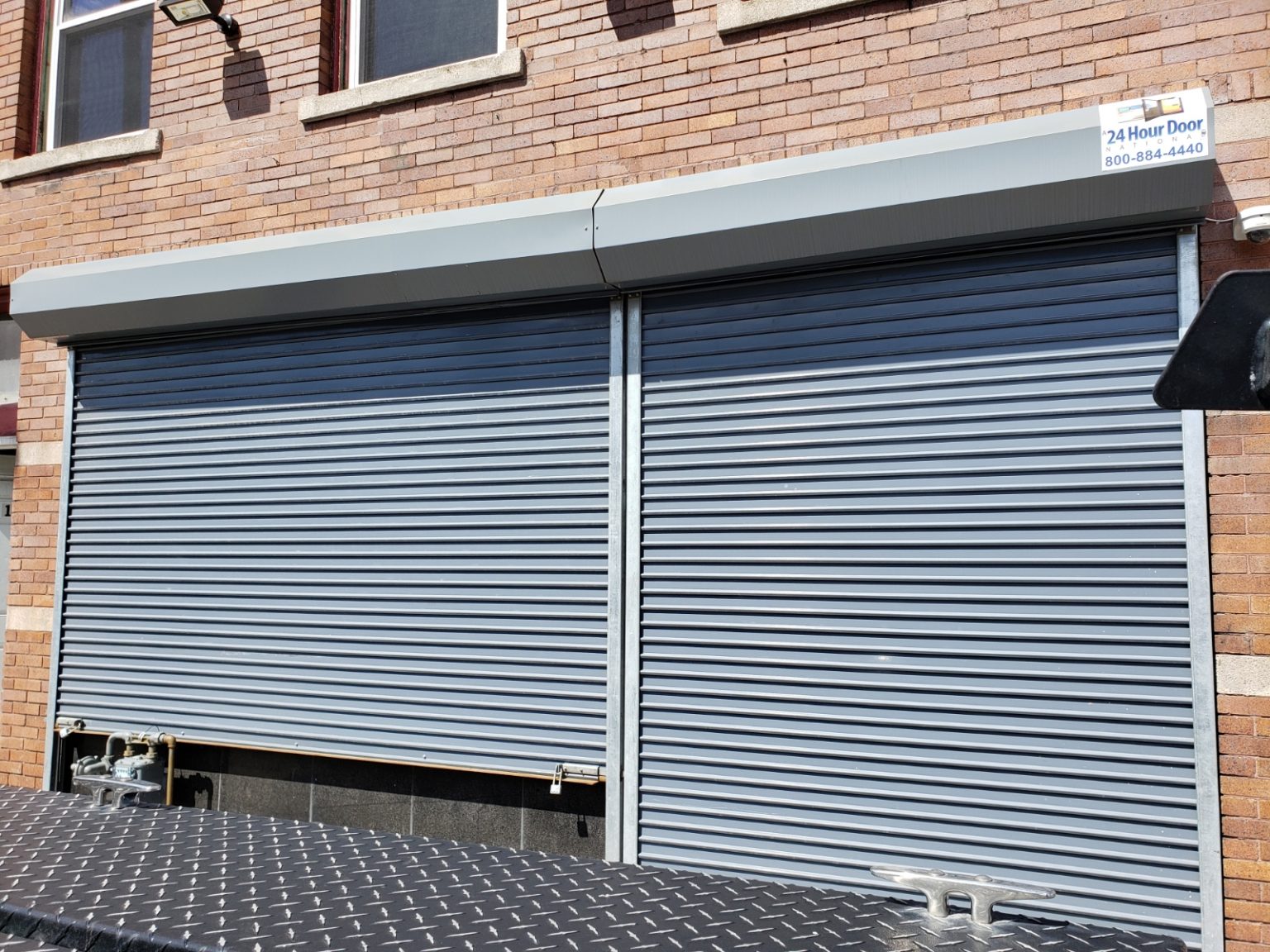
For business owners, that is the sweet spot. The entry works for the public, supports the building’s obligations, and holds up under the less glamorous realities of operating a commercial space.
A well-chosen storefront door is not only attractive. It is compliant where it needs to be, usable by real people with different needs, and backed by a repair strategy that acknowledges how businesses actually run in Atlanta. If you keep accessibility, security, hardware, and emergency service in the same conversation from the beginning, you are far more likely to end up with an entrance that does its job every single day.